Oil Surge, the Dollar Base, and the Yuan in 2026
Overview
The 2026 oil spike above 100–110 dollars per barrel, driven largely by war-related disruptions in the Strait of Hormuz, has re‑ignited fears of 1970s‑style stagflation and raised questions about the future of the dollar‑centric oil system versus rising yuan‑based alternatives. Historically, major oil shocks have strengthened near‑term demand for dollars via the petrodollar system, even as they destabilized growth and inflation, and current evidence suggests 2026 is more likely to fit that pattern—with only gradual, partial expansion of yuan‑linked oil channels rather than a wholesale break from the dollar.
1. The 2026 oil shock in context
1.1 What is driving the current spike?
Brent and other benchmarks have surged past 100 dollars, with some spot and forward prices trading above 110 dollars, as conflict around Iran and the Strait of Hormuz has disrupted tanker traffic and raised the perceived risk of a supply cutoff from the Gulf. Analysts estimate that sustained prices around 110 dollars could add roughly 0.7 percentage points to global inflation and shave about 0.4 percentage points from global growth, a classic stagflationary mix that tightens financial conditions and squeezes real incomes. Flows into risk assets have cooled, with reports of equity fund outflows and a broad risk‑off rotation into the dollar and safe‑haven assets like U.S. Treasuries and, to a lesser degree, gold.
1.2 How markets are reading the shock
Market commentary in early 2026 explicitly frames the oil move as a potential replay—if not in magnitude, then in structure—of the 1970s stagflation shock, linking higher energy costs, sticky inflation, and weaker growth. At the same time, many macro analysts argue the shock is still best seen as a cyclical jolt layered onto an existing disinflationary trend, not a full regime change: real rates, central‑bank credibility, and more flexible labor markets differ sharply from the 1970s backdrop. For FX, the near‑term pattern has been textbook: higher oil, wider growth uncertainty, and risk aversion have pushed the dollar higher, especially against energy‑importer currencies, even as the surge raises longer‑term questions about global dollar reliance.
2. Historical parallels: 1970s oil shocks to today
2.1 The 1973–74 and 1979 shocks
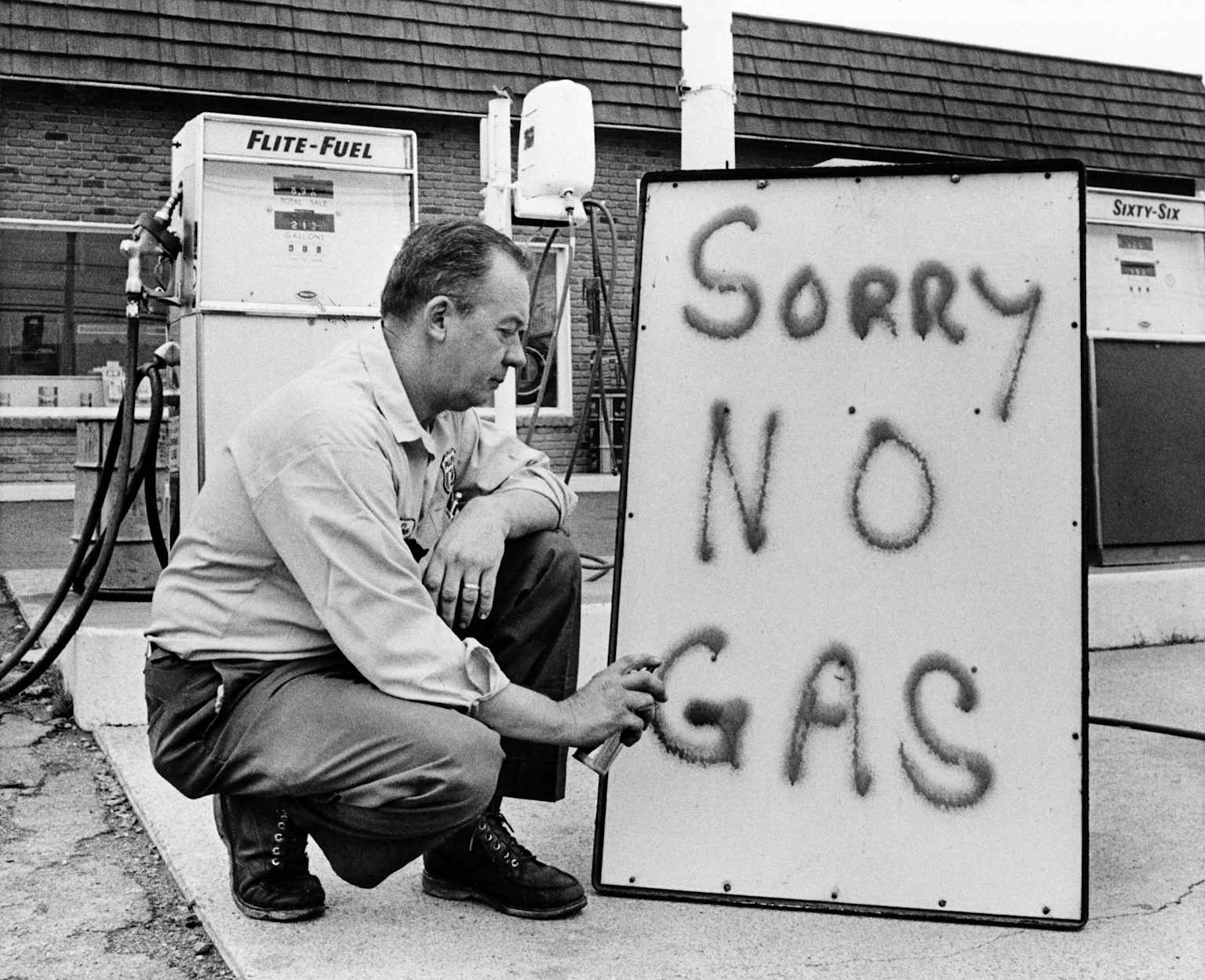
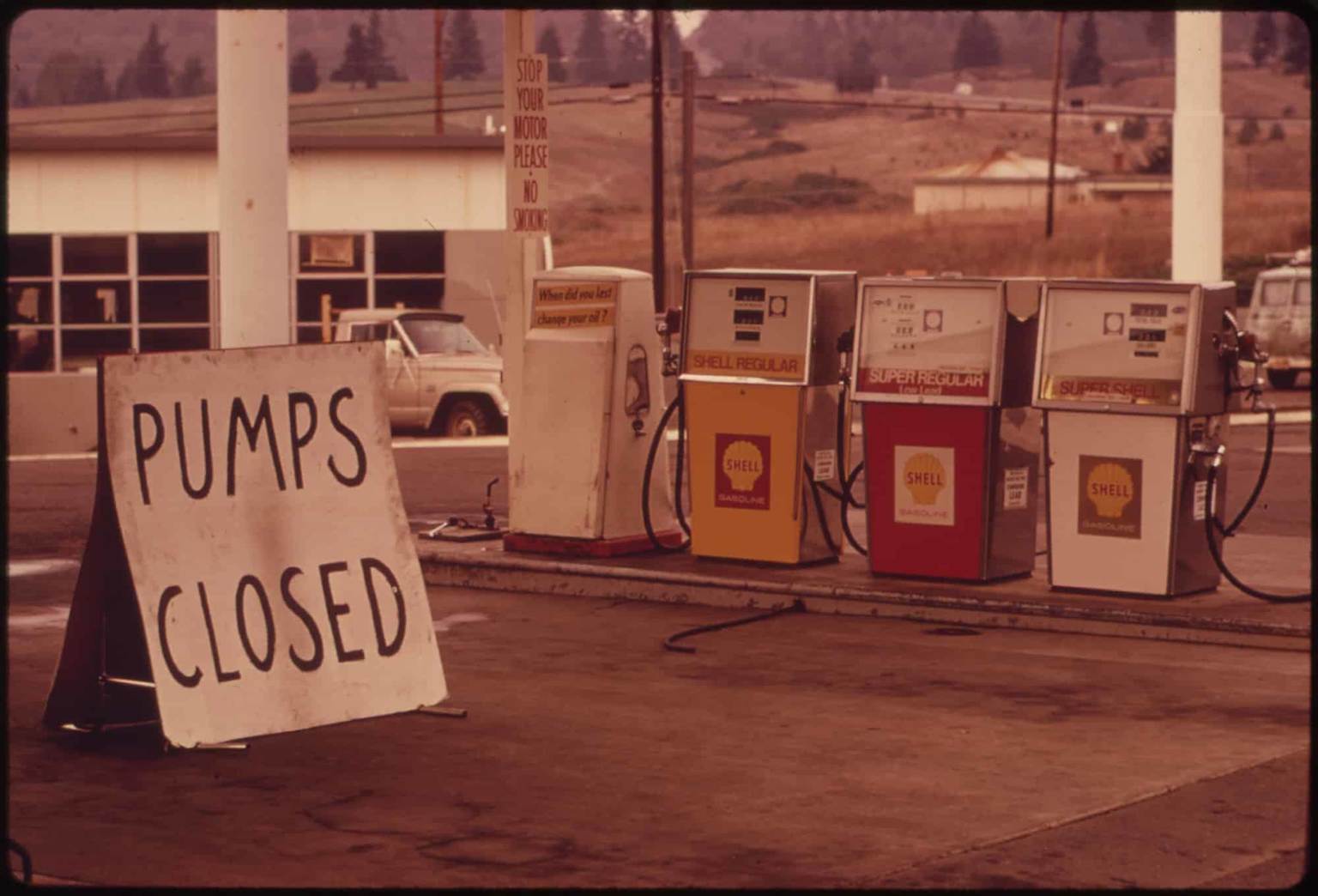
In 1973–74, the Arab oil embargo and coordinated OAPEC production cuts sent crude prices from roughly 3 dollars per barrel to more than 11 dollars, catalyzing a deep energy crisis and embedding the term “stagflation” into macro vocabulary. Fuel shortages, gas lines, and outright station closures in the U.S. and Europe became emblematic of the crisis, with the oil shock feeding into already‑loose monetary settings and wage‑price spirals. A second major shock around the 1979 Iranian Revolution and Iran‑Iraq War pushed prices sharply higher again, prolonging high inflation and forcing central banks into painful tightening that culminated in recessions at the start of the 1980s.
2.2 Later oil spikes and policy evolution
Subsequent spikes—such as the 1990–91 Gulf War, the mid‑2000s run‑up to around 140 dollars, and the 2011 Arab Spring period—also raised inflation and pressured growth, but occurred in a world with more credible inflation‑targeting central banks and deeper financial markets.
By the 2000s and 2010s, advanced economies were notably more energy‑efficient: oil consumption per unit of GDP had fallen substantially versus the 1970s, dampening the pass‑through from oil to headline inflation and limiting second‑round wage effects.
The 2020 pandemic shock, which briefly sent oil prices negative on some contracts, underscored how much financialization and storage dynamics now matter; that episode contrasts sharply with today’s 2026 supply‑driven spike but highlights the system’s structural flexibility.
2.3 Key similarities and differences vs 2026
Similarities to the 1970s include: a supply‑driven oil price shock tied to Middle‑East conflict, elevated inflation before the shock, and concerns that policy is constrained between fighting inflation and supporting growth.
Differences include: far more independent and credible central banks, inflation‑targeting frameworks, less unionized labor, greater energy efficiency, and the presence of large strategic petroleum reserves that can partially smooth shocks.
Crucially for FX, the dollar now floats, U.S. capital markets dwarf those of the 1970s, and global finance is far more integrated—factors that support the dollar in crises, even as they transmit volatility more quickly.
3. The petrodollar system: mechanics and evolution
3.1 Origins in the 1970s
After the U.S. closed the gold window in 1971, the early‑1970s oil shocks left Washington searching for a new anchor for global dollar demand; the answer emerged through oil trade with Saudi Arabia. In 1974, the U.S. and Saudi Arabia reached an economic and security agreement under which Saudi oil would effectively be priced and settled primarily in dollars, with Riyadh recycling its surpluses into U.S. Treasuries and financial assets in exchange for security guarantees and economic cooperation. Whether or not there was a formal, exclusive “dollars only” pricing clause in the legal text, the practical outcome was that by the late 1970s most OPEC oil was invoiced in dollars, cementing the petrodollar system.
3.2 How petrodollars reinforce dollar dominance
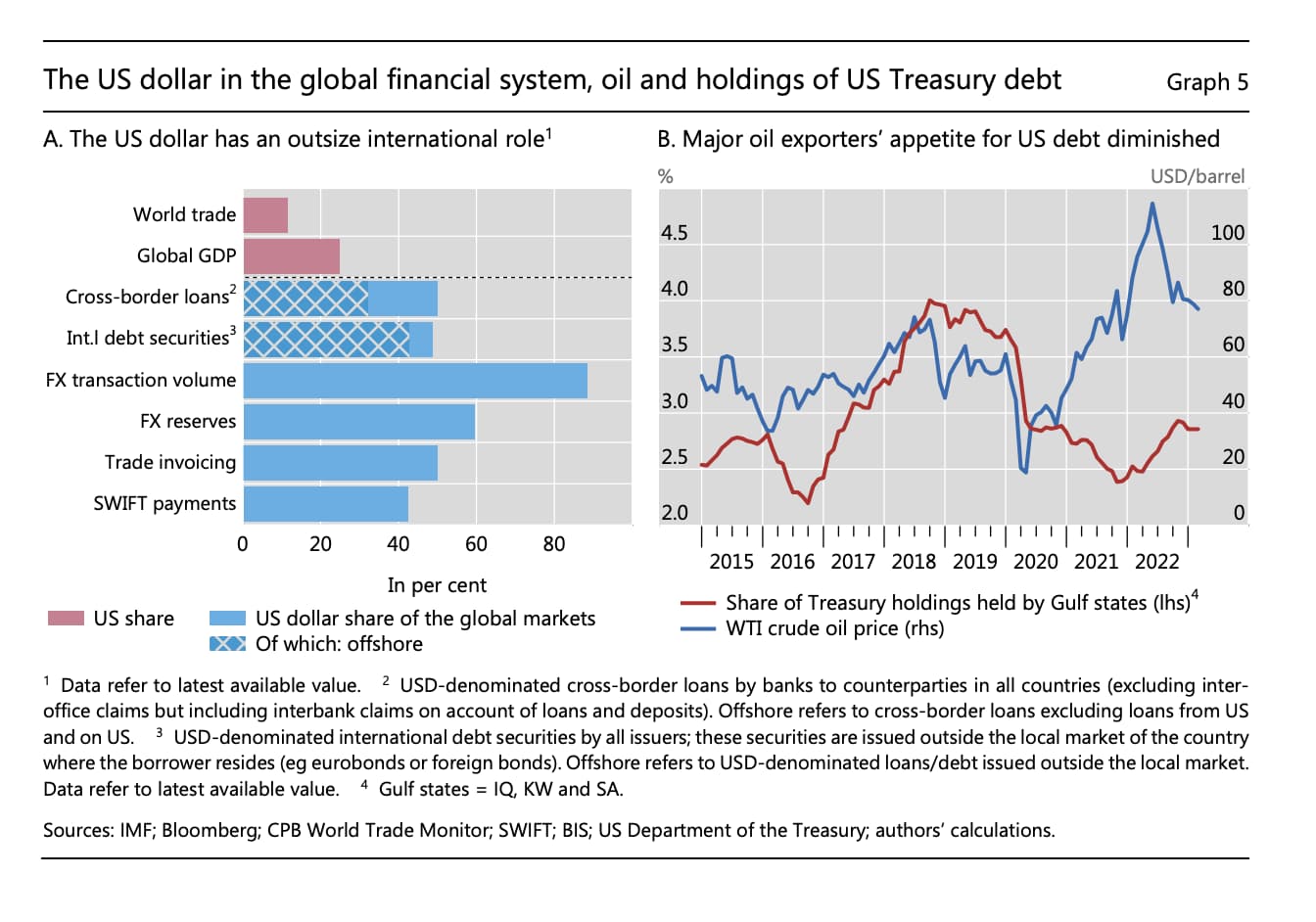
Once oil—the world’s most‑traded commodity—was largely dollar‑denominated, importers everywhere needed dollars both to pay for energy and to manage external balances, anchoring global demand for U.S. currency and Treasuries. Oil exporters accumulated vast dollar reserves and recycled them through U.S. financial markets, supporting low U.S. yields and enabling the U.S. to run larger current‑account deficits—the so‑called “exorbitant privilege.” To this day, estimates suggest that a large majority (often cited around four‑fifths) of global oil trade is still invoiced in dollars, helping explain why oil shocks often coincide with near‑term dollar strength rather than weakness.
3.3 Adjustments since the 1980s
Over time, some oil exporters have diversified their reserves toward euros, yen, and more recently yuan and gold, but the depth, liquidity, and perceived safety of U.S. markets have preserved the dollar’s central role.
Financial innovation—Eurodollar markets, petrodollar recycling via global banks, and a much larger derivatives complex—has institutionalized the dollar’s role in global energy finance beyond the original geopolitical bargain.
Even as climate policy and the energy transition raise questions about long‑run oil demand, the combination of entrenched invoicing practices and U.S. financial depth has kept the petrodollar framework resilient through multiple crises.
4. The rise of the yuan and the “petroyuan” narrative

4.1 China’s strategic moves
China, now the world’s largest crude importer at roughly 8–9 million barrels per day, has sought for more than a decade to increase the global role of the yuan and reduce reliance on the dollar in commodity trade.
A pivotal step was the 2018 launch of yuan‑denominated crude futures on the Shanghai International Energy Exchange, which for the first time allowed foreign participants to trade oil contracts settled in renminbi.
Beijing also built complementary infrastructure, including yuan‑based gold futures and mechanisms for oil exporters to convert yuan receipts into gold, making yuan‑settled oil more attractive by offering a route to a globally trusted asset.
4.2 De‑dollarization via swaps and BRICS energy links
China and several energy exporters have expanded bilateral currency‑swap lines and local‑currency settlement, most notably with Russia after Western sanctions and with Gulf states exploring yuan‑based arrangements. Reports indicate that by the mid‑2020s a rising share of Russia’s trade, including some oil flows, has been settled in yuan, and that BRICS‑linked initiatives now promote petro‑yuan contracts that bypass traditional dollar‑centric payment rails and in some cases even SWIFT. An emerging BRICS‑energy alliance, with Russia and Saudi Arabia as key producers, has introduced coordinated yuan‑denominated oil contracts, with some estimates suggesting that yuan‑settled oil flows have reached a non‑trivial but still minority share of daily Brent‑linked volumes.
4.3 Limits to yuan dominance
Despite these advances, the yuan remains a small share of global FX reserves and cross‑border payments, with IMF data in recent years putting it in the low single digits versus more than 60 percent for the dollar. Key constraints include limited capital‑account convertibility, opaque legal and institutional frameworks, and Beijing’s reluctance to fully liberalize interest rates and capital flows, all of which reduce foreign investors’ willingness to hold large, free‑flowing yuan balances. Energy analysts emphasize that Shanghai‑traded crude benchmarks are still far from displacing Brent or WTI as reference prices, and that while yuan‑based contracts will likely grow, they do not yet constitute a systemic challenge to dollar hegemony on their own.
5. 1970s–2026: what oil shocks have meant for the dollar
5.1 Typical FX dynamics around oil spikes
Historically, large oil price spikes have tended to strengthen the dollar in the short term, for two main reasons: safe‑haven flows into U.S. assets and the mechanical increase in dollar demand by oil importers paying larger nominal energy bills.
Energy‑importing EM currencies are usually hit hardest, as higher oil costs worsen current‑account balances and raise concerns about inflation and policy credibility, sometimes triggering tightening cycles and growth slowdowns.
In advanced economies, oil‑driven inflation shocks often lead markets to price either higher policy rates or a longer period of elevated rates, supporting rate‑differential‑driven dollar strength even as real‑sector data weaken.
5.2 The dollar’s real value vs nominal strength
While the dollar often appreciates on a nominal basis during oil shocks and risk‑off episodes, its real purchasing power can still erode if inflation outpaces nominal returns, especially over longer horizons.
The 1970s are the canonical case: the dollar eventually re‑anchored under Volcker’s high‑rate regime, but U.S. households and savers experienced a substantial real wealth hit from a decade of high inflation.
In 2026, some commentators again highlight this distinction, warning that even if DXY stays strong, persistent stagflation could “destroy the dollar” in real terms, boosting the appeal of gold and real assets as hedges.
5.3 Structural vs cyclical forces
Cyclically, oil shocks, risk‑off flows, and higher real yields tend to support the dollar, as seen again in 2026, where a flight to safety has underpinned the greenback.
Structurally, however, repeated sanctions, weaponization of payment systems, and diversification by major surplus countries are slowly chipping away at the dollar’s share at the margin and encouraging alternative infrastructures.
The interplay of these forces implies that the dollar can strengthen further in the near term even as the long‑run system edges toward more multipolarity.
6. 2026 scenarios: dollar base vs yuan expansion in oil trade
6.1 Baseline: reinforced petrodollar under stress
Given the 2026 shock’s drivers and the institutional setup, the most plausible near‑term outcome is a reinforced, not diminished, role for the dollar in oil and broader trade settlements. Higher dollar oil prices force importers from Europe to Asia to secure more dollar funding, while the safe‑haven bid into U.S. Treasuries and money markets keeps dollar funding deep and relatively liquid despite higher volatility. For energy exporters, continued dollar invoicing plus high prices mean larger nominal dollar surpluses, some of which will still be recycled—directly or indirectly—into U.S. assets, even if diversification into gold and non‑dollar claims is gradually increasing.
6.2 Alternative: incremental petroyuan gains
At the margin, 2026‑style shocks can also strengthen the political case for de‑dollarization among countries facing U.S. sanctions risk or seeking strategic autonomy, giving further impetus to yuan‑based contracts and BRICS‑aligned payment systems. Saudi moves to deepen ties with China and participate in non‑dollar payment projects, BRICS energy coordination, and currency‑swap networks collectively build a parallel infrastructure where a growing fraction of oil and gas trade can be settled outside the dollar. Still, current evidence points to this as a gradual process: yuan‑denominated energy contracts and reserves are rising from a low base, and the yuan’s limited convertibility and China’s capital controls remain major brakes on full‑scale petrodollar displacement in 2026.
6.3 Tail risks: fragmentation and dual systems
A more extreme tail scenario would involve geopolitical fragmentation into relatively discrete dollar‑centric and yuan‑centric energy blocs, with sanctions, capital controls, and digital‑currency‑based payment rails reinforcing separation.
Under such a setup, a larger share of China‑Russia‑Gulf trade might eventually settle in yuan or other non‑dollar units, while U.S.‑aligned economies would remain tightly embedded in the petrodollar system.
Even in that world, however, the dollar would likely remain the dominant global reserve and invoicing currency for some time, but its share would be meaningfully lower and the system more regionally segmented.
7. Implications for FX and rates positioning in 2026
7.1 Near‑term petrodollar dynamics
For 2026, the most robust near‑term macro trade remains that an oil‑driven stagflation scare is dollar‑positive versus most EM and many DM importers, especially where central banks are behind the curve on inflation.
Rate‑differential trades that favor the U.S. and select commodity exporters with credible policy (for example, some Gulf and resource‑rich EM names) over vulnerable importers are consistent with both historical oil‑shock patterns and current data.
Credit and funding stresses are most likely to emerge in dollar‑short EM corporates and sovereigns; these episodes, too, typically coincide with further dollar strength until policy backstops or price reversals materialize.
7.2 Monitoring slow‑burn yuan and de‑dollarization risks
From a medium‑ to long‑term perspective, a serious FX and rates framework around de‑dollarization should track: the share of global reserves held in dollars vs yuan; the volume of commodity contracts (especially oil and gas) traded in Shanghai vs Brent/WTI; and the size and usage of cross‑border swap lines that settle in yuan.
Also critical are markers of institutional change: any substantial liberalization of China’s capital account, further integration of yuan assets into global bond indices, and formal energy‑pricing commitments by major producers to accept significant yuan shares.
Barring such shifts, the structural story for 2026 remains one of incremental multipolarity layered on top of a still‑dominant, and cyclically reinforced, dollar base.
8. Key takeaways
- The 2026 oil surge resembles the 1970s in its stagflationary mix of higher prices and weaker growth, but occurs in a very different monetary and financial regime.
- The petrodollar system that emerged from the 1970s oil crises still anchors global oil trade, and the current shock is more likely to reinforce near‑term dollar demand than to undermine it.
- Yuan‑based oil contracts, BRICS energy coordination, and non‑dollar payment rails are real and growing, yet remain constrained by China’s institutional choices and are unlikely to overturn dollar dominance in 2026; instead they set the stage for a slower drift toward a more multipolar currency system.